
احصل على حل
AR▼
هذا المنتج متوافق مع المعدات والتطبيقات الخاصة بالعلامات التجارية التالية أو مناسب لها، وذلك للاسترشاد به عند الاختيار فقط. تعود العلامات التجارية إلى أصحابها كل على حدة، ولا تمثل أي شراكة أو تأييد.
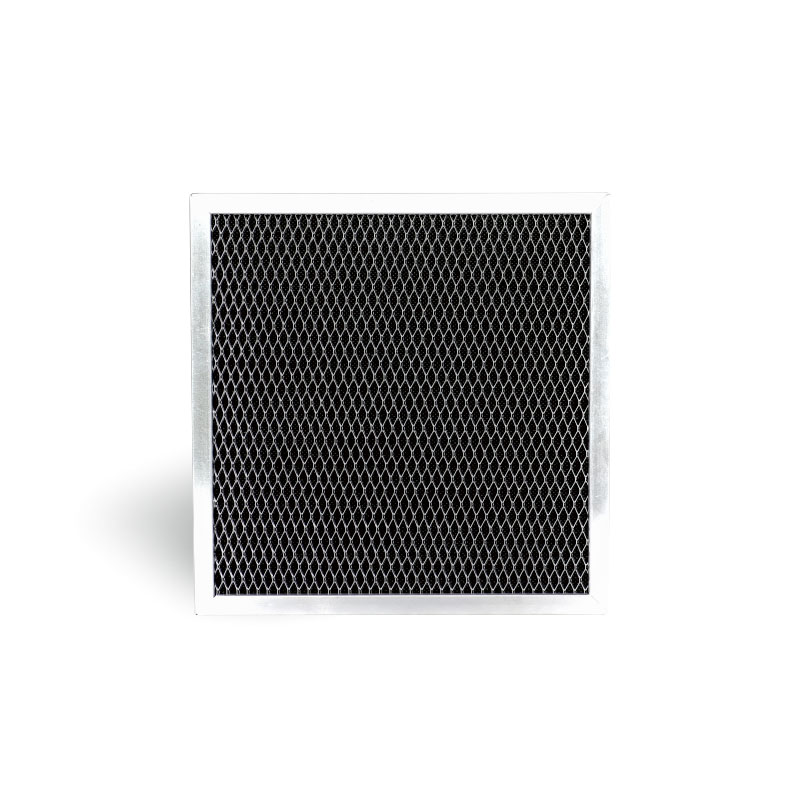
This is an American-style range hood filter built by Jyntrel as a multi-layer aluminum foil, flame-retardant polyester fiber and high-efficiency activated carbon composite. It captures heavy cooking grease at the mesh and adsorbs cooking odors in the same air path, protecting the motor and blower behind it. It is made for ductless recirculating hoods, American-style range hoods, kitchen exhaust fan systems and commercial kitchen fume treatment equipment. It is supplied as a 100% made-to-size OEM/ODM part with an aluminum frame and a choice of handle and clip styles.
Read the filter as a component of the hood's air path, not as a standalone screen. Cooking vapor enters the front face at the hood's working velocity, passes the corrugated aluminum foil layers where grease droplets impinge and coalesce, then moves through the flame-retardant polyester fiber, and finally crosses the activated carbon layer before the air returns to the kitchen or leaves through the duct.
Each layer adds resistance, so the pressure drop you can accept is set by the blower curve of the hood. In recirculating hoods the carbon layer is the main odor stage and must remain in the path; in ducted hoods the same cartridge still traps grease before the duct. Corrugated foil geometry is chosen so that the airflow is forced through a series of direction changes rather than a straight open channel, which is what allows grease to be intercepted instead of carried through. Because the frame is rigid aluminum, the cartridge holds its shape under suction and does not collapse into the blower opening.
Environmental conditions matter as much as airflow. The filter works in hot, greasy kitchen air and is expected to be washed and returned to service, so the aluminum foil and frame are the durable structural elements while the fiber and carbon are the consumable stages. Fire safety is part of the operating envelope: the product conforms to the UL 900 Class 1 / Class 2 flame-retardant safety test standard, which addresses how the filter behaves if flame reaches it. Tell us the hood type, the ducted or recirculating mode and the airflow so we can match layer count and thickness to your system.
Because every cartridge is made to the hood it serves, selection starts with your installation data rather than a catalogue number. Send the hood or appliance model, or a drawing of the filter slot with length, width and thickness, and state the handle and clip arrangement you need. Add the airflow the blower moves and whether the hood recirculates or ducts outdoors, so the layer count and carbon stage can be set correctly. Operating conditions, such as the cooking duty and cleaning routine, and the order quantity complete the picture.
Jyntrel supports OEM/ODM across dimensions, structure, filter media grade, frame material, logo and packaging, and has developed more than 1000 filtration solutions. Samples can be produced for fit confirmation before volume production.
| Item | Detail |
|---|---|
| Product name | American Range Hood Filter — activated carbon composite model |
| Core structure materials | Multi-layer corrugated aluminum foil + flame-retardant polyester fiber + high-efficiency activated carbon layer |
| Core filtration function | Physical interception of heavy grease and protection of motor and blower wheel; strong adsorption of cooking fume odors |
| Fire safety rating | Conforms to UL 900 Class 1 / Class 2 flame-retardant safety test standard |
| Main end applications | American-style range hoods, ductless recirculating range hoods, kitchen exhaust fan systems, commercial kitchen fume treatment equipment |
| Frame and clip customisation | High-strength aluminum frame; handle and plastic or metal clip styles selected to the customer's mounting slot design |
| Size and specification customisation | 100% made to customer equipment dimensions; length, width, thickness and number of aluminum foil layers produced under flexible OEM/ODM |
| Quality certification system | Produced in the company's 50,000 m² plant with a CNAS-accredited laboratory, under ISO 9001 / ISO 14001 and IATF 16949 quality systems |
In each case the filter is the first stage the grease-laden air meets, which is why its fit, layer count and pressure drop should be matched to the blower rather than chosen by size alone.
Production runs on multiple automated lines with a monthly capacity of millions of pieces, which supports stable supply for repeat hood programmes. The 50,000 m² plant includes 6 clean workshops totalling 20,000 m². An in-house laboratory accredited by CNAS issues test reports on filtration efficiency, dust holding capacity and resistance, and the site holds ISO 9001, ISO 14001 and ISO 45001 certification, with IATF 16949 added in 2024. Quality control runs through IQC, IPQC and OQC. With more than 20 years of filtration product development and manufacturing, Jyntrel has exported to Europe, the United States, Japan and Korea for over 20 years; products meet REACH and RoHS requirements and compliance documents can be provided. The company is located in Zhongshan, Guangdong, China.
To quote accurately, send us the device or vehicle model, the filter size or a drawing, the airflow or water flow of the system, the operating conditions (cooking duty, ducted or recirculating, cleaning routine) and the quantity you need. Our team will respond with a matched configuration and lead time. Contact Jyntrel with your hood data and we will turn it into a specification.
The cartridge is built around a multi-layer corrugated aluminum foil path that forces the air through repeated direction changes, so grease is intercepted rather than carried straight through. It is intended for the working velocities of American-style range hoods and kitchen exhaust systems, and the number of foil layers and the thickness are set to your blower's airflow during customisation. Share the airflow and hood model and we will match the layer count.
Give us the airflow the blower moves, the hood type, and whether the hood recirculates or ducts outdoors. These determine how much resistance the cartridge can add and whether the activated carbon stage is the main odor path. With the size or drawing and the quantity, we can propose a configuration.
Yes. The filter is 100% made to customer equipment dimensions, with length, width, thickness and the number of aluminum foil layers produced under OEM/ODM. The high-strength aluminum frame can be fitted with handle and plastic or metal clip styles selected against your mounting slot design. Send a drawing or the appliance model and we will confirm the fit.
Custom cartridges are quoted against the specific size, structure and layer count, so the minimum order quantity is confirmed with the quotation for your configuration. Share your dimensions, airflow and expected volume and our team will set the MOQ for that build.
Lead time depends on whether the size is new tooling or a repeat build, and on the quantity ordered. Once we have your dimensions, airflow data and order volume, we will confirm a production schedule with the quotation. Monthly capacity of millions of pieces supports repeat supply.
Replacement depends on cooking duty and cleaning routine, so we do not give a single interval. In ducted hoods the aluminum and fiber stages are washed and returned to service, while the activated carbon layer is the consumable odor stage in recirculating hoods. Tell us your cooking load and we will advise a practical change-out approach.
The product conforms to the UL 900 Class 1 / Class 2 flame-retardant safety test standard, and the polyester fiber stage is flame-retardant. This addresses how the filter behaves if flame reaches it in the hood. Ask us for the applicable compliance documents with your inquiry.
Send the hood or appliance model, the filter size or a drawing, the airflow, the operating conditions and the quantity. <a href="/en/contact">Contact Jyntrel</a> and our team will reply with a matched configuration and lead time.