
احصل على حل
AR▼
هذا المنتج متوافق مع المعدات والتطبيقات الخاصة بالعلامات التجارية التالية أو مناسب لها، وذلك للاسترشاد به عند الاختيار فقط. تعود العلامات التجارية إلى أصحابها كل على حدة، ولا تمثل أي شراكة أو تأييد.
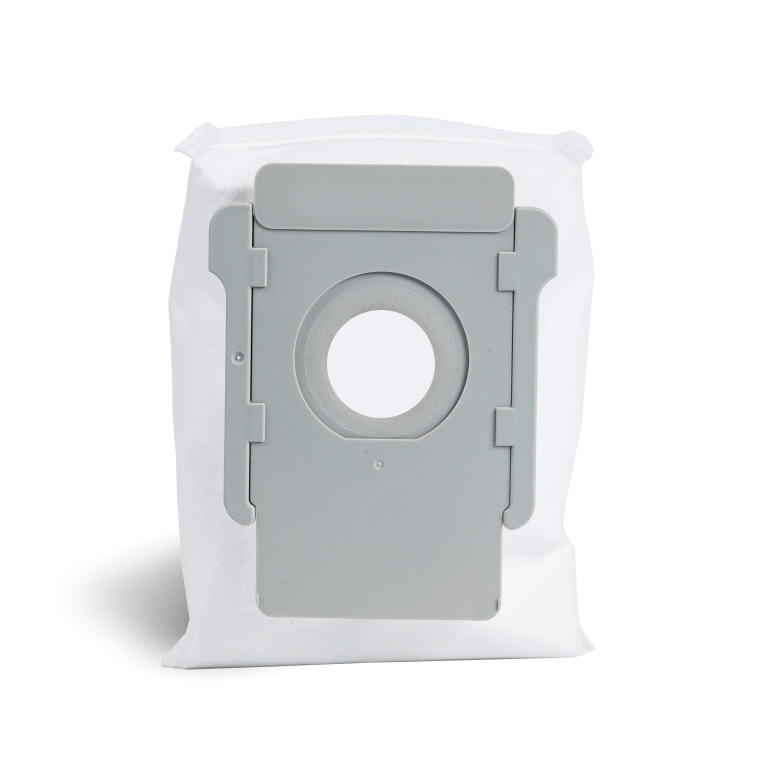
Jyntrel dust bags are multi-layer composite PP meltblown filter bags designed for automatic dust collection bases of robot vacuums, handheld vacuums, and commercial vacuum bins. They capture fine dust, mite allergens, pollen, and hair, preventing secondary exhaust pollution while maintaining strong suction. These bags suit OEM and ODM customers who need reliable filtration and custom-fit covers for major vacuum brands.
In an automatic dust collection base, the bag sits on the exhaust path between the bin and the motor. When the base runs, airflow passes through the bag at a velocity set by the vacuum’s fan curve. The bag’s high-porosity composite PP structure keeps resistance low, so the motor does not have to work harder to maintain suction. This matters in households where the base may run daily for weeks between bag changes.
The environment also affects performance. Fine dust, pollen, and mite allergens are common in bedrooms and living areas; the bag’s meltblown layer is designed to trap these particles and keep them from re-entering the room. Because the bag is sealed by a sliding handle before removal, dust stays inside during disposal, which helps in homes with allergy-sensitive occupants.
The bag uses a multi-layer composite of polypropylene nonwoven and meltblown fabric, with an option for antibacterial filter cotton. This construction targets fine particulate matter (PM2.5), dust mites, pollen, and hair, reducing exhaust emissions. The high-porosity design keeps airflow resistance low, so the vacuum’s suction remains stable as the bag fills. High dust-holding capacity means fewer changes and consistent performance over the bag’s service life.
A sliding handle automatically seals the bag when you pull it out, so users never touch the collected dust. The bag is available with a rigid cardboard or molded plastic cover that clicks into the base, and optional activated carbon layers can be added for odour control.
To recommend the right bag, we need the vacuum model or base station model, the interface dimensions or a drawing of the cover, the airflow or suction data of the device, and the operating conditions such as typical dust load and cycle frequency. We also need your target quantity and any special requirements like odour control or antibacterial treatment.
Jyntrel offers full customisation: bag dimensions, cover type (cardboard or plastic), filter media grade, and packaging with your logo. With over 1,000 filtration solutions developed, we can match the bag to your device’s air path and ensure a secure fit.
| Item | Detail |
|---|---|
| Product name | Dust bag for handheld vacuums / automatic dust collection bag for robot vacuums |
| Core material | Multi-layer high-precision composite PP (polypropylene nonwoven + meltblown fabric) / antibacterial filter cotton |
| Filtration function | High-precision capture of fine dust (PM2.5), dust mites, pollen, hair and other household allergens; prevents secondary exhaust pollution |
| Physical fluid characteristics | High-porosity breathable design, very low operating resistance, high dust-holding capacity, does not compromise motor suction |
| Main applications | Automatic dust collection bases for robot vacuums, handheld cordless vacuums, commercial vacuum bins |
| Size and cover customisation | 100% customised to device dimensions. Cardboard or eco-friendly plastic injection-moulded covers; sliding auto-seal and activated carbon odour-control versions available |
| Company certification | 50,000 m² modern clean production plant and national CNAS testing centre. ISO 9001, ISO 14001, and IATF 16949 quality management systems. |
These bags are used wherever fine dust and allergens need to be captured and disposed of without mess, from homes to light commercial cleaning.
Jyntrel operates multiple automated production lines with a monthly capacity of millions of pieces. Our 50,000 m² plant includes 20,000 m² of cleanrooms, and we have been exporting to Europe, the US, Japan, and Korea for over 20 years. Our in-house CNAS-accredited laboratory can issue test reports for filtration efficiency, dust-holding capacity, and resistance. We are certified to IATF 16949 (2024), ISO 9001, ISO 14001, and ISO 45001, and our products meet REACH and RoHS requirements. Quality control covers IQC, IPQC, and OQC throughout production. For custom projects, we support OEM/ODM including size, structure, filter grade, cover material, logo, and packaging. Located in Zhongshan, Guangdong, China.
To get a tailored quote, please tell us your device model, size or drawing, airflow or suction data, operating conditions, and estimated quantity. Our engineering team will respond with a solution that fits your air path. Contact us to start the conversation.
Yes. The bag uses a high-porosity composite PP meltblown structure that maintains low airflow resistance even at high velocity, so suction stays strong. It is designed for the airflow patterns of robot vacuum bases and handheld vacuums.
We need the vacuum or base station model, the airflow or suction specifications, the interface dimensions or a drawing, and your expected dust load and cycle frequency. This helps us select the right media grade and cover design.
The multi-layer composite meltblown media captures fine particles (PM2.5), dust mites, pollen, and hair. Efficiency can be tested in our CNAS-accredited lab, and reports are available upon request.
Yes. We customise dimensions, cover type (cardboard or plastic), and filter media to match your device. Provide a sample, drawing, or 3D model, and we will develop a bag that fits your base station.
Standard products have an MOQ of 5,000–10,000 pieces; customised items are negotiated based on complexity. Samples can be arranged for evaluation.
In-stock standard models ship in 7–15 days. Customised orders typically take 30–45 days, and tooling projects may take 45–60 days. Our monthly capacity of millions of pieces supports stable supply.
Replacement depends on usage and dust load; in typical home use, the bag can last 30–60 days. The sliding handle seals automatically for clean disposal.
Yes, our CNAS-accredited laboratory can issue reports for filtration efficiency, resistance, and dust-holding capacity. We can also coordinate with third-party labs if needed.