
Solicitar propuesta
ES-ES▼
Este producto es compatible con los equipos y aplicaciones de las siguientes marcas, o apto para ellos, solo como referencia para la selección. Las marcas comerciales pertenecen a sus respectivos propietarios; no implican afiliación ni respaldo.
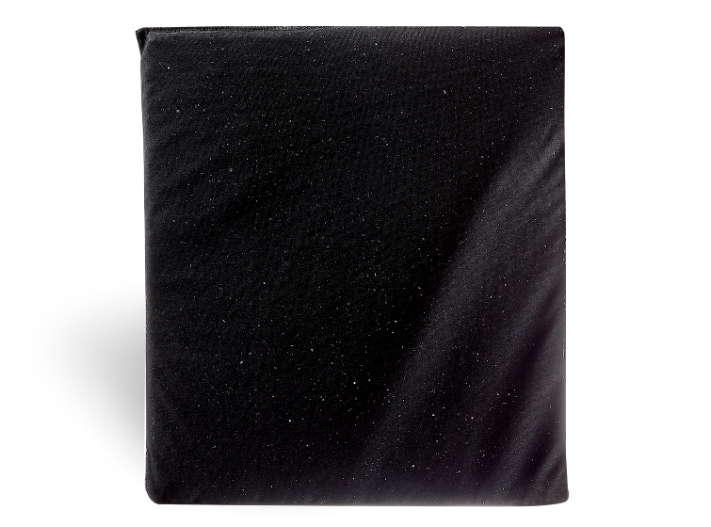
This washable activated carbon odor filter (adhesive carbon type) is a sponge-based filter that combines primary particle capture with adsorption of formaldehyde, benzene, ammonia and common odors. It is designed for air purifiers, fresh-air systems, automotive cabin filters, central air return grilles and industrial vacuums, and is supplied by Jyntrel for OEM and ODM projects. The filter uses polyurethane sponge as the base, with fine activated carbon particles bonded to it through a curing process, and can be washed and reused to reduce replacement frequency.
In a typical installation, the filter sits as a pre-filter layer in front of a finer stage or as a stand-alone odor-control layer at an air inlet. Air passes through the open-cell sponge at low velocity, where larger particles such as hair and dust are intercepted, and the activated carbon exposed on the sponge surface adsorbs odorous gases. Because the carbon is distributed across the surface rather than packed in a dense bed, the pressure drop is low and the filter can handle the airflow of air purifiers, fresh-air units and range-hood odor-control modules without imposing a significant load on the fan.
The operating environment matters for service life. In kitchen or automotive applications where grease and humidity are present, the filter should be washed at intervals to remove surface loading and restore adsorption capacity. The sponge structure tolerates repeated washing without losing its shape, and the bonded carbon remains in place during normal handling. For systems with high dust loading, a separate primary filter ahead of the carbon layer is recommended to protect the adsorption surface and extend the interval between washes.
The filter delivers two functions in one layer: primary filtration of coarse particles and adsorption of harmful gases and odors. The activated carbon is selected for its adsorption capacity and is fixed to the sponge with a curing process that maintains exposure of the carbon surface to the air stream. This construction supports formaldehyde, benzene and ammonia adsorption in applications such as air purifier pre-filters, fresh-air system pre-filtration, automotive cabin air filters, central air return grilles and industrial vacuum exhausts.
Because the sponge is flexible and can be cut or punched into different shapes, the filter can be adapted to irregular spaces in compact appliances. The low airflow resistance helps maintain the designed airflow of the host system, and the washable design allows end users to clean the filter with water and reuse it, reducing consumable cost over the life of the appliance.
To select or customise this filter, Jyntrel needs the operating conditions of your system. Please provide the device or vehicle model, the installation space and dimensions (or a drawing), the airflow or water flow if relevant, the operating temperature and humidity, the target gases or odors to be removed, and the expected service interval. With these inputs, we can recommend the sponge thickness (from 3 mm to 50 mm), pore density (PPI), carbon loading and outer dimensions, and we can support OEM/ODM customisation including size, shape, frame material, logo and packaging.
| Item | Detail |
|---|---|
| Product name | Washable Activated Carbon Filter (Sponge Type) |
| Core base material | Polyurethane foam sponge |
| Core adsorbent | Fine powdered or granular activated carbon fixed by a special curing process |
| Core purification performance | Primary filtration of large particles (hair/dust) plus adsorption of formaldehyde (HCHO), benzene, ammonia and other harmful gases |
| Physical structure advantages | Repeatedly washable, very low airflow resistance, flexible and easy to cut, good air permeability |
| Main application terminals | Air purifier pre-filter layer, fresh-air ventilation system pre-filter, automotive air-conditioning filter, central air-conditioning return air inlet, industrial vacuum cleaner |
| Specification and size customisation | Full OEM/ODM flexible customisation. Thickness (e.g. 3 mm–50 mm), pore density (PPI) and outer dimensions with punch-forming processing |
| Quality certification system | Produced in the company's 20,000 m² clean workshop; the company holds ISO9001/14001 environmental and quality system certification and IATF16949 certification |
This filter is used where odor control and primary particle capture are needed in the same layer. Common installations include the pre-filter stage of air purifiers, pre-filtration in fresh-air ventilation systems, automotive cabin air filters, central air-conditioning return air grilles and industrial vacuum cleaners. In each case, the filter is selected for its low airflow resistance and its ability to be washed and reused, which suits appliances that are expected to run for long periods between major services.
Jyntrel operates multiple automated production lines with a monthly capacity of millions of pieces, supported by more than 20 years of export experience to Europe, the US, Japan and South Korea. The 50,000 m² plant includes six clean workshops totalling 20,000 m², where this filter is produced. Quality control follows IQC, IPQC and OQC stages, and the company holds ISO 9001, ISO 14001 and ISO 45001 certifications, as well as IATF 16949 (obtained in 2024). Products comply with REACH and RoHS requirements, and compliance documents are available. The in-house laboratory is CNAS-accredited and can issue test reports for filtration efficiency, dust holding capacity and resistance. Jyntrel has developed more than 1,000 filter solutions and supports OEM/ODM customisation of size, structure, filter material grade, frame material, logo and packaging. The company is located in Zhongshan, Guangdong, China.
To receive a tailored recommendation, please tell us your device or vehicle model, the required size or a drawing, the airflow or water flow, the operating conditions (temperature, humidity, target gases) and the quantity you expect. Our team will respond with a suitable specification and quotation. You can reach us through the contact page.
The filter is designed for low airflow resistance and is typically used in applications where air passes through the sponge at moderate velocity, such as air purifiers and fresh-air systems. For high-velocity ducts, we recommend confirming the pressure drop with a sample test; the open-cell structure allows air to pass through, but the appropriate thickness and PPI should be selected for the system. Please share your airflow data so we can advise.
To quote accurately, we need the airflow rate (m³/h or CFM), the expected face velocity, the allowable pressure drop, and the installation dimensions. If the filter will be used in a system with variable airflow, please provide the operating range. With these data, we can recommend the sponge thickness and pore density that balance adsorption performance and energy use.
Yes, the polyurethane sponge and bonded carbon construction can be used in kitchen and automotive environments where humidity and grease are present. However, grease and dust will load the surface over time, so the filter should be washed at recommended intervals to maintain adsorption. In heavy grease applications, a separate grease filter ahead of this carbon layer will extend its service life.
Washing frequency depends on the operating conditions and the amount of dust or grease in the air stream. In normal domestic use, washing every 2–4 weeks is typical, and the filter can be reused multiple times. Replacement is recommended when adsorption capacity drops noticeably after washing or when the sponge shows physical damage. For a specific service interval, please provide your operating conditions.
We support OEM/ODM customisation of thickness from 3 mm to 50 mm, pore density (PPI), and outer dimensions, including circular, square and irregular shapes via punch-forming. Frame material, logo and packaging can also be customised. To start, please provide a drawing or sample of the space available.
Yes, we can provide samples for evaluation. Standard specifications are typically available free of charge with freight collected, while custom samples may incur a sampling fee that is usually refundable or deductible against a bulk order. Sample lead time is 1–3 working days for standard items and 7–15 working days for custom samples. Please contact us with your requirements.
For standard specifications, the MOQ is typically 1,000–2,000 pieces; for custom products, the MOQ is about 3,000–5,000 pieces depending on tooling. Standard stock items ship in 3–7 days, while OEM orders generally take 25–35 days after sample and order confirmation. Large orders are supported by our 50,000 m² plant capacity. For urgent needs, priority scheduling can be arranged.
Our CNAS-accredited laboratory can provide test reports for activated carbon iodine value, odor removal efficiency, airflow resistance, wash durability and carbon adhesion. These reports are generated in-house and can support your product development and verification. Please let us know which tests you require when requesting a quote.