
קבל הצעה
HE-IL▼
מוצר זה תואם או מתאים לציוד וליישומים של המותגים הבאים, לצורכי בחירה בלבד. הסימנים המסחריים שייכים לבעליהם בהתאמה ואינם מעידים על שותפות או הבעת תמיכה.
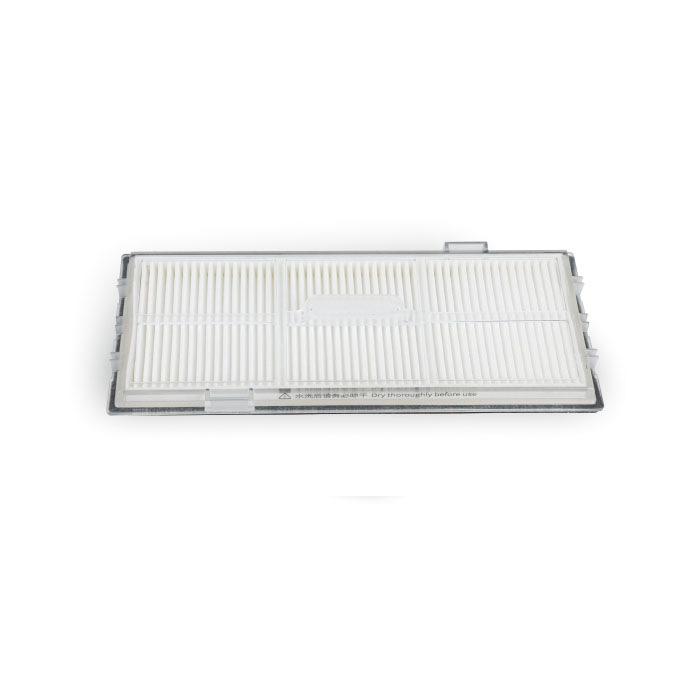
The Jyntrel washable dust box filter is a removable filtration element for robot vacuum cleaners and handheld vacuums, engineered to capture PM2.5, fine dust, dust mites, pollen and pet dander before air returns to the room. It is built for appliance makers and OEM buyers who need low-airflow-resistance media that preserves suction and battery run time. The filter uses PTFE membrane or composite PP meltblown media and is customised to the exact dust box dimensions of each device.
In a robot vacuum or handheld vacuum, the filter sits on the exhaust side of the dust box, downstream of the cyclone or bagless separation stage. Air leaving the dust box still carries a fraction of fine particulate; the filter’s job is to intercept that residual load without adding measurable back pressure to the motor-fan unit. The operating envelope is therefore defined by three variables: airflow rate, face velocity across the media, and the dust-loading profile of the application.
Jyntrel selects media with high porosity and a stable pore structure so that initial pressure drop stays low and rises gradually as dust accumulates. This matters in handheld vacuums, where a restrictive filter can shorten battery run time, and in robot vacuums, where airflow is fixed by the fan curve. The removable design allows the user to take the filter out, rinse it, and return it to service, which keeps the airflow path open between deep cleans. For devices that see humid or variable conditions, moisture-resistant and antimicrobial filter media options are available.
The filter’s microporous structure is engineered to block fine dust, dust mites, pollen and pet dander, reducing secondary contamination from the exhaust air. Because the media is selected for low airflow resistance, the motor does not have to work harder to maintain suction, which helps preserve battery run time in cordless devices. The composite construction is also designed to tolerate repeated washing: under correct cleaning practice, the filter can be washed more than 50 times while filtration efficiency remains above 90% of its initial value.
Mechanical robustness is part of the performance brief. The filter is built to resist clogging and to hold its shape through handling and rinsing, and the removable format makes it easy for end users to clear hair and dust from the dust box. For OEM programmes, the same performance targets can be applied across a family of devices by adjusting media grade and frame geometry rather than changing the core filtration concept.
Because the filter is a fit-critical component, selection starts with the dust box, not with a catalogue number. Jyntrel customises 100% to the device’s dust box dimensions and offers injection-moulded frames with over-moulded edge sealing to control bypass. Media grade, frame material, logo and packaging can all be specified. To move from enquiry to a quotation, we ask for the device or vehicle model, a size drawing or physical sample, the airflow or water flow the device operates at, the operating conditions (humidity, dust type, cleaning regime), and the expected order quantity. With those inputs, our team can propose a media grade and frame design and confirm sample lead time.
| Item | Detail |
|---|---|
| Product name | Robot vacuum cleaner / handheld vacuum filter |
| Core filtration material | High-precision PTFE (polytetrafluoroethylene microporous membrane) / composite PP (polypropylene meltblown) and other moisture-resistant, antimicrobial filter media |
| Core purification function | Strong interception of PM2.5, fine dust, dust mites, pollen and pet dander inside the vacuum, preventing secondary contamination from exhaust air |
| Physical fluid characteristics | High-porosity breathable design with very low operating airflow resistance; does not drain motor suction and supports battery run time |
| Main end applications | Smart robot vacuums, handheld cordless vacuums, bed mite removers, car mini vacuums, wet-dry floor cleaners |
| Frame and size customisation | 100% customised to the device dust box dimensions; eco-friendly injection-moulded frame, over-moulded edge sealing; scalable OEM production for washable media (PTFE-coated version) |
| Company certification system | 50,000 m² modern production base and a CNAS-accredited testing centre; ISO 9001, ISO 14001 and IATF 16949 quality management systems |
The filter is used in smart robot vacuums, handheld cordless vacuums, bed mite removers, car mini vacuums and wet-dry floor cleaners. In each case the duty cycle and dust load differ: a robot vacuum runs long, low-airflow cycles across floors, while a handheld vacuum sees short bursts of high-velocity airflow and mixed debris. Jyntrel matches media grade and frame design to these profiles, so the same filter platform can serve multiple device families without compromising fit or airflow. For wet-dry cleaners, the moisture-resistant media option helps maintain performance where humidity is present.
Jyntrel operates multiple automated production lines with a monthly capacity of millions of pieces, supported by more than 20 years of filter R&D and manufacturing experience and more than 20 years of continuous exports to Europe, the United States, Japan and South Korea. The 50,000 m² plant includes 20,000 m² across 6 clean workshops, and the in-house laboratory is CNAS-accredited and can issue test reports for filtration efficiency, dust holding capacity and resistance. The company holds ISO 9001, ISO 14001 and ISO 45001 certifications, and obtained IATF 16949 automotive quality management system certification in 2024.
Quality control runs through IQC, IPQC and OQC, covering incoming materials, in-process inspection and outgoing checks. Products comply with REACH and RoHS environmental regulations, and compliance documents can be provided. OEM/ODM support covers size, structure, media grade, frame material, logo and packaging, with more than 1,000 filtration solutions developed to date.
To receive a solution-oriented quotation, send us your device model, a size drawing or sample, the airflow the device operates at, your operating conditions and your target quantity. Our team will review the airflow path, propose a media grade and frame design, and confirm sample and production timing. Contact Jyntrel to start the conversation.
Yes. The filter is built with high-porosity PTFE or composite PP media selected for low airflow resistance, so it maintains performance across the airflow range of handheld and robot vacuums. For high-velocity handheld devices, we match media grade to the fan curve. Share your device airflow and we will confirm a suitable specification.
We need the device’s operating airflow rate, the dust box dimensions or a drawing, and the expected dust-loading profile. Humidity and cleaning regime also help. With these inputs we can propose a media grade and frame design. Send your data through our contact page for a quotation.
Under correct cleaning practice, the filter can be washed more than 50 times while filtration efficiency remains above 90% of its initial value. The removable design makes rinsing and reinstallation straightforward. This helps reduce consumable replacement frequency for end users. Contact us for cleaning guidance specific to your device.
Yes. Jyntrel customises 100% to the device’s dust box dimensions, with options for injection-moulded frames, over-moulded edge sealing, media grade, logo and packaging. We support OEM/ODM programmes and have developed more than 1,000 filtration solutions. Provide a drawing or sample and we will confirm feasibility.
Sample lead time can be as fast as 7 days after specification confirmation. MOQ and production lead time depend on whether the filter is standard or customised; please confirm with our team based on your device and order volume. We will state both clearly in the quotation.
Humidity can affect dust loading and media stability. For devices used in humid conditions or wet-dry cleaners, we recommend moisture-resistant PTFE or composite PP media. Tell us your operating humidity range and cleaning regime, and we will select the appropriate grade.
Because the filter is washable, replacement depends on washing frequency, dust load and device type rather than a fixed calendar interval. We can advise a replacement schedule based on your application once we know the operating conditions. Ask our team during the quotation stage.
Yes. Our in-house laboratory is CNAS-accredited and can issue reports for filtration efficiency, dust holding capacity and resistance. These reports support your qualification and market-entry documentation. Contact us to discuss the specific tests required for your programme.