
קבל הצעה
HE-IL▼
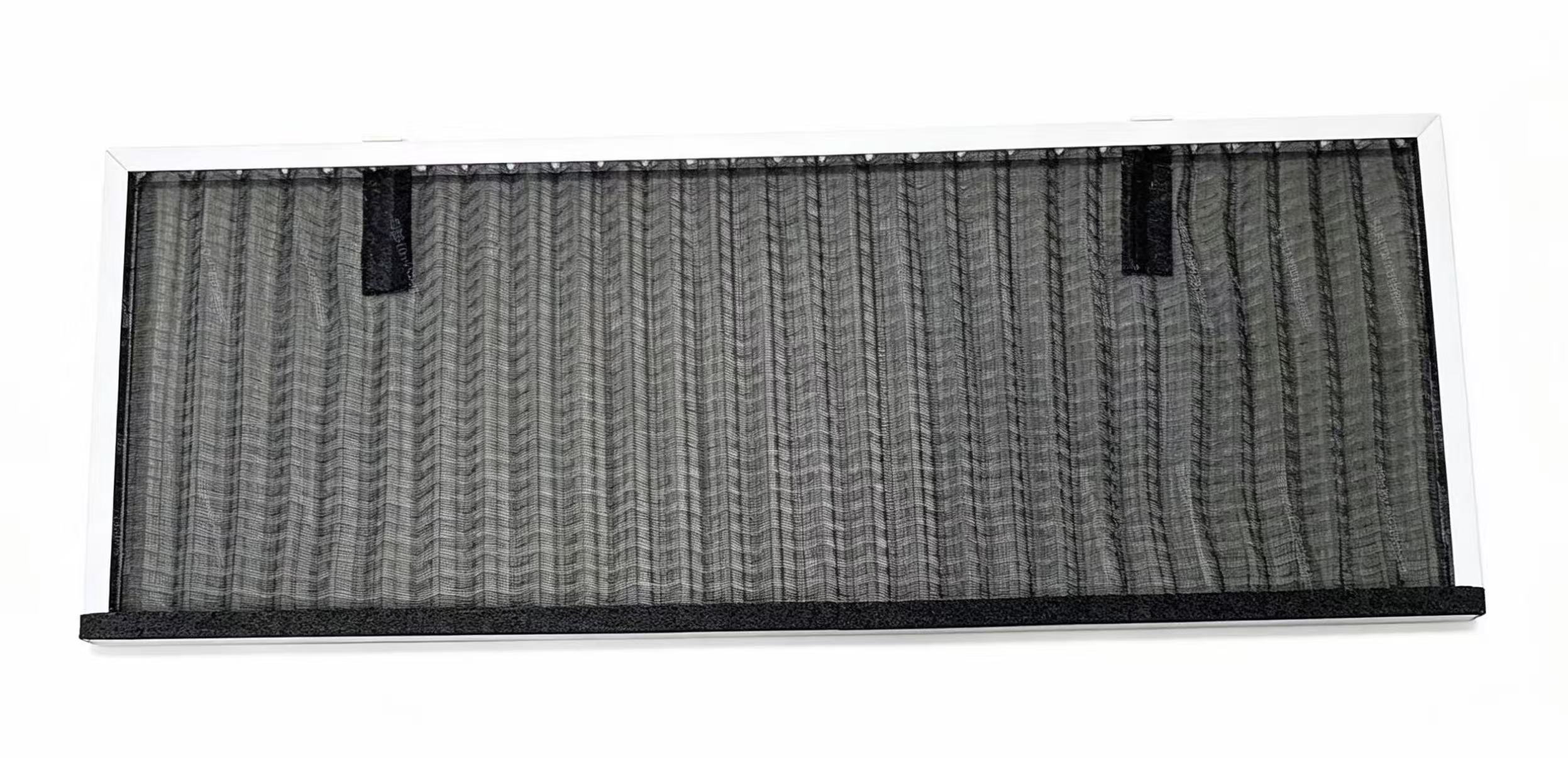
The Jyntrel washable metal primary filter mesh is a reusable pre-filter built for air-handling systems where dust, lint and coarse debris must be stopped before they reach the coil or the next filter stage. It captures particles of 5 μm and larger at G1–G2 efficiency, using a layered aluminium, 304 stainless steel or galvanised wire mesh in a reinforced metal frame. It suits residential and commercial air-conditioning outdoor units, kitchens with heavy oil mist, and coastal or high-humidity installations where salt spray and repeated washing are part of normal operation. Jyntrel manufactures the mesh in Zhongshan, Guangdong, China, and supplies it in standard and fully customised sizes.
In a typical installation the filter sits at the intake of the air path, ahead of the fan and coil, so the air velocity at the filter face sets the pressure drop the system must overcome. Jyntrel specifies the mesh at a face velocity of 2 m/s, where the operating resistance is ≤50 Pa and airflow decay stays below 5%. At that condition the layered expanded mesh presents a large open area while forcing the air through a shallow, turbulent path that lets larger particles settle on the metal surfaces rather than pass through.
The operating temperature range is −20 °C to 250 °C, so the same filter can be used in cold-climate outdoor units and in hot, dry exhaust streams without a change of media. In coastal or high-humidity areas, the 304 stainless steel version is the appropriate choice because the mesh itself resists corrosion; in heavy oil-mist environments the aluminium or galvanised variants are cleaned more often and replaced less often. Because the filter is washed rather than discarded, the airflow path is restored after each cleaning, and the pressure drop returns close to its original value as long as the mesh is not deformed during handling.
The filter combines physical interception with a weak electrostatic effect on the metal mesh, which helps hold fine dust that would otherwise re-entrain. Rated G1–G2, it is a primary filter, not a final filter: its job is to protect downstream components and extend the service life of higher-efficiency stages. The construction uses 3–7 layers of wave or pleated expanded mesh stacked in an offset pattern, held in an aluminium alloy, galvanised or stainless steel frame of 1.0–2.0 mm thickness with reinforced corners.
Two practical benefits follow from the metal construction. First, the filter is a zero-consumable item: it is cleaned with low-pressure clean water and a neutral detergent, typically every 1–3 months, and every month during the dusty season. Second, the low resistance at the design face velocity keeps fan energy demand down; Jyntrel states that the low-airflow-resistance design supports energy savings of about 10% compared with higher-resistance primary media in the same position. The mesh is fixed with a clip-on or magnetic design that limits air bypass and allows tool-free removal for cleaning.
Because the filter is sized to the air path, selection starts with the installation rather than with a catalogue number. Jyntrel supplies standard sizes such as 500×500×10 mm and builds fully customised sizes to drawing. To recommend the right mesh grade, frame material and layer count, the following information is useful:
| Item | Detail |
|---|---|
| Core filter media | Aviation-grade aluminium foil mesh (general use) / 304 stainless steel mesh (coastal corrosion resistance) / galvanised wire mesh (economic option) |
| Filter class and efficiency | G1–G2 (primary filtration); high-efficiency interception of particles ≥5 μm |
| Structure and frame | 3–7 layers of wave or pleated expanded mesh in an offset stack; aluminium alloy, galvanised or stainless steel frame, 1.0–2.0 mm thick, with reinforced corners |
| Operating performance | Operating temperature: −20 °C to 250 °C | Operating resistance: ≤50 Pa at 2 m/s face velocity | Airflow decay: <5% |
| Installation and maintenance | Clip-on or magnetic design for leak-resistant, easy removal; clean with low-pressure clean water and neutral detergent every 1–3 months (every month in the dusty season) |
| Applications and sizes | Residential and commercial air-conditioning outdoor units, heavy oil-mist environments, high-humidity salt-spray areas; standard sizes such as 500×500×10 mm and fully customised sizes |
The mesh is used where a washable primary stage makes more sense than a disposable one. In residential and commercial air-conditioning outdoor units, it protects the coil from leaves, lint and coarse dust and is rinsed in place. In kitchens and food-processing areas with heavy oil mist, the metal mesh can be cleaned with a neutral detergent without losing its shape. In coastal and high-humidity regions, the 304 stainless steel version is selected for its resistance to salt spray. It is also used as a pre-filter in light industrial ventilation and in automotive or equipment cabins where a durable, reusable intake screen is required.
Jyntrel has more than 20 years of experience in filter research and manufacturing, and has exported to Europe, the United States, Japan and South Korea for over 20 years. The production base in Zhongshan, Guangdong, China, covers 50,000 m², including six clean workshops totalling 20,000 m². Multiple automated production lines support a monthly capacity of millions of pieces, which gives buyers a stable supply position for repeat orders and seasonal peaks.
Quality control follows IQC, IPQC and OQC stages across the process. The company operates a CNAS-accredited laboratory that can issue test reports for filtration efficiency, dust holding capacity and resistance. Jyntrel holds ISO 9001, ISO 14001 and ISO 45001 certification and has been certified to IATF 16949 since 2024. Products meet REACH and RoHS requirements, and compliance documents can be provided. OEM and ODM support covers size, structure, filter grade, frame material, logo and packaging, with more than 1,000 filter solutions developed to date.
To receive a quotation or a sample recommendation, send us the device or vehicle model, the size or a drawing, the design airflow or face velocity, the operating conditions (temperature, humidity, oil mist or salt spray), and the quantity you expect to order. Our team will match the mesh grade, frame material and layer count to your air path. Contact Jyntrel to start the discussion.
The mesh is specified at a face velocity of 2 m/s, where resistance is ≤50 Pa and airflow decay is below 5%. At higher velocities the pressure drop rises, so the fan curve should be checked before selection. Jyntrel can advise on layer count and mesh grade for higher-velocity intake positions.
We need the design airflow of the unit and the face velocity at the filter, or the fan curve if the velocity is not known. The filter pocket dimensions or a drawing are also required. With these figures Jyntrel can confirm the mesh grade and expected resistance.
Yes. Jyntrel offers standard sizes such as 500×500×10 mm and fully customised sizes built to drawing. Frame material, layer count and fixing method can also be specified. Send the dimensions and operating conditions for a proposal.
Minimum order quantity and lead time depend on the size, frame material and quantity requested. Jyntrel confirms both at quotation stage based on the production schedule. Please include your expected annual volume in the inquiry.
Cleaning is recommended every 1–3 months, and every month during the dusty season, using low-pressure clean water and a neutral detergent. The mesh is reusable, so replacement is only needed if it is damaged. Regular cleaning keeps resistance close to the specified ≤50 Pa at 2 m/s.
The low-resistance design supports energy savings of about 10% compared with higher-resistance primary media in the same position. The figure depends on the system and operating conditions. Jyntrel can discuss the expected effect for a specific air path.
Samples can be arranged so you can check fit, mesh grade and frame finish in your unit. Provide the size or drawing and the operating conditions. Jyntrel will confirm sample availability and the quotation along with it.
For coastal or high-humidity salt-spray areas, the 304 stainless steel mesh is recommended for corrosion resistance. For heavy oil mist, aluminium or galvanised mesh is commonly used and cleaned more frequently. Both are available with clip-on or magnetic fixing.