
समाधान प्राप्त करें
HI-IN▼
यह उत्पाद निम्नलिखित ब्रांडों के उपकरणों और अनुप्रयोगों के साथ अनुकूल है या उनके लिए उपयुक्त है, केवल चयन के संदर्भ के लिए। ट्रेडमार्क उनके संबंधित स्वामियों के हैं; इसका अर्थ साझेदारी या समर्थन नहीं है।
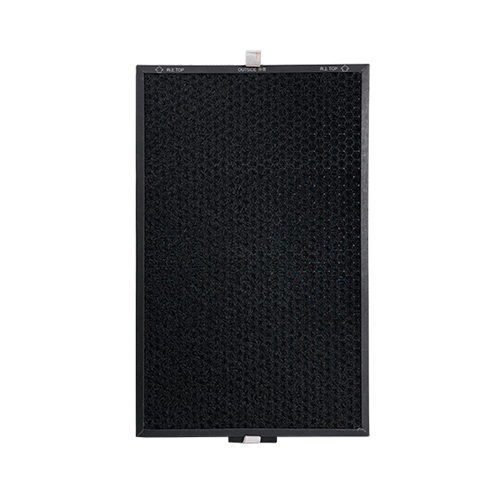
A flat activated carbon filter mesh is a plate-type adsorption filter that removes formaldehyde, benzene, ammonia and other volatile organic compounds (VOCs) from an air stream. Jyntrel builds it in several activated carbon structures so it can sit in front of a fan, inside a purifier housing or in a fresh-air duct. It is intended for air purifier and fresh-air system makers, automotive cabin filter suppliers, HVAC and AHU equipment builders, vacuum cleaner producers and industrial off-gas pre-treatment integrators.
Adsorption is a residence-time problem before it is a media problem. Odour molecules must meet carbon surface inside the filter, and that only happens if the air moves through the media slowly enough and is spread evenly across the face. When you specify a flat activated carbon filter mesh, the system data that decides its behaviour is the volumetric airflow, the face velocity at the filter plane, the gas concentration, the temperature, the relative humidity and the dust load carried into the carbon layer.
In a typical purifier the flat mesh sits downstream of the particle stage, so the air reaching it is already largely free of lint and coarse dust, and the carbon works on gases rather than on solids. In a fresh-air unit or an AHU the same plate may be exposed to outdoor air with higher humidity and higher contaminant levels, which changes how quickly the carbon is used up. In an industrial off-gas train the plate is usually a pre-treatment step ahead of a more specialised stage, and its role is to take the first, highest concentration of VOCs out of the stream.
Because the plate is thin, it suits installations where depth is limited and where the air path is short and direct. Face velocity should be kept in a range where the pressure drop stays acceptable to the fan curve; if the plate is oversized to slow the air down, the pressure drop falls but the housing grows. Jyntrel works through this trade-off with you using the airflow and pressure budget of your own system, not a generic bench figure.
The functional core is high-performance activated carbon, selected and loaded for the gases you need to control. In the flat mesh format the carbon is presented so that formaldehyde, benzene and ammonia, together with the broader group of volatile harmful gases, are adsorbed as the air passes through the plate. The media type, the carbon loading and the plate thickness are chosen together, because a heavier carbon load extends the working life while a lighter plate keeps the pressure drop low.
Jyntrel offers several structural forms of the same adsorption idea: a honeycomb activated carbon filter made from a sintered carbon block, a honeycomb version built on a plastic honeycomb substrate, a corrugated paper honeycomb type, and a cylindrical activated carbon filter. The flat plate is the form most often specified for purifier and fresh-air housings, while the other forms serve equipment with a different internal geometry or a different airflow direction. This range matters when your device has an unusual cavity, because the carbon can be carried in whichever structure fits rather than forcing the housing to change.
Flat activated carbon filter mesh is a non-standard part by default. Dimensions and specifications are customised to the actual equipment parameters and requirements of the customer, so the starting point is your drawing or cavity measurement rather than a catalogue size. To quote a workable plate, Jyntrel needs the length, width and available thickness, the airflow through the filter plane or the fan curve, the gases you are targeting and their expected concentration, the operating temperature and humidity, and the particle filtration stage ahead of the carbon.
Customisation covers the plate size, the carbon structure, the carbon loading, the frame material, the logo and the packaging. Because the media and the frame are specified together, a change in one usually calls for a check on the other, and this is handled during sample development. Share the device model and any existing filter drawing and the team can confirm which structure suits the available depth.
| Item | Detail |
|---|---|
| Core material | High-performance activated carbon |
| Structural options | Honeycomb activated carbon filter (sintered carbon block); honeycomb activated carbon filter (plastic honeycomb); honeycomb activated carbon filter (corrugated paper type); activated carbon filter (cylindrical type) |
| Filtration performance | Efficient adsorption and removal of formaldehyde, benzene, ammonia and other volatile harmful gases (VOCs) |
| Application scope | Household and commercial air purifiers, fresh-air systems, automotive air-conditioning filter elements, central air-conditioning circulation systems, vacuum cleaner filter elements and industrial off-gas treatment |
| Size and specification | Non-standard customisation according to the customer's specific equipment parameters and requirements |
The flat plate format is most familiar in household and commercial air purifiers, where it follows the particle filter and handles odours and VOCs before the air returns to the room. Fresh-air systems use the same logic on incoming outdoor air, and central air-conditioning circulation systems use it to control odour carry-over between zones. Automotive air-conditioning filter elements are another fit, since cabin airflow is limited in depth and the plate can be shaped to the housing.
Vacuum cleaner filter elements use the carbon stage to control exhaust odour, and industrial off-gas treatment uses the plate as an adsorption stage or pre-treatment step in a larger train. Across these applications the selection question is the same: what gas, at what concentration, at what airflow, in what space.
Jyntrel runs multiple automated production lines with a monthly capacity of millions of pieces, and more than 20 years of continuous export to Europe, the United States, Japan and Korea support stable supply for repeat programmes. The production base covers a 50,000 m² plant, including 6 clean workshops totalling 20,000 m². The in-house laboratory is CNAS-accredited and issues test reports on filtration efficiency, dust holding capacity and resistance.
Management systems include IATF 16949, obtained in 2024, together with ISO 9001, ISO 14001 and ISO 45001. Products meet the REACH and RoHS environmental requirements and compliance documents can be supplied. Quality control runs through IQC, IPQC and OQC. The company supports OEM/ODM across size, structure, filter media grade, frame material, logo and packaging, and has developed more than 1,000 filtration solutions. Jyntrel is based in Zhongshan, Guangdong, China.
To move from a general plate to a specified part, send the device or vehicle model, the size or a drawing of the filter cavity, the airflow or water flow through the unit, the operating conditions (temperature, humidity, target gases and concentration) and the quantity you expect per order or per year. With those inputs Jyntrel can propose a structure, confirm feasibility and quote. Contact the team with your operating conditions and the inquiry will be routed to the right engineer.
It can, but face velocity directly affects both adsorption performance and pressure drop. At higher velocity the air spends less time in contact with the carbon, so the plate may need more carbon loading or a larger face area to hold performance. Share your airflow and available filter plane and Jyntrel will confirm a workable configuration.
The volumetric airflow through the filter plane, or the fan curve for the device, together with the available plate dimensions and thickness. The target gases and their expected concentration, the operating temperature and humidity, and the particle stage ahead of the carbon also help. With these inputs the plate can be sized rather than guessed.
Yes. Flat activated carbon filter mesh is customised to the customer's specific equipment parameters and requirements, so dimensions, carbon structure, carbon loading, frame material, logo and packaging can all be specified. Because the media and frame are developed together, a drawing or cavity measurement is the best starting point.
Samples are part of the evaluation process, and the terms depend on whether the specification is standard or custom. Provide the device model, size or drawing, airflow and operating conditions so the sample reflects your real system. The team will then confirm the sample arrangement and the quotation together with your inquiry.
MOQ and lead time depend on the specification and order volume, and are confirmed in the quotation for your project. Because the plate is a non-standard part, the quantity and the customisation scope are reviewed together. Send your expected annual or per-order quantity with the technical data and Jyntrel will respond with both figures.
Replacement depends on the gas concentration, humidity, temperature and daily running hours in your system, so no single interval applies to every installation. The plate is consumed as it adsorbs, and a heavier carbon load extends the working life. Jyntrel can review your operating conditions and advise on a replacement plan for your device.
The activated carbon adsorbs formaldehyde, benzene, ammonia and other volatile harmful gases (VOCs) from the air stream. Performance for a specific gas depends on its concentration and on the residence time in the plate. Tell Jyntrel which gases you need to control and the plate can be specified around them.
Send the device or vehicle model, the size or a drawing, the airflow or water flow, the operating conditions, and the quantity you expect. These five points let the team select the structure and prepare a quotation. <a href="/en/contact">Contact Jyntrel</a> with your details to begin.