
समाधान प्राप्त करें
HI-IN▼
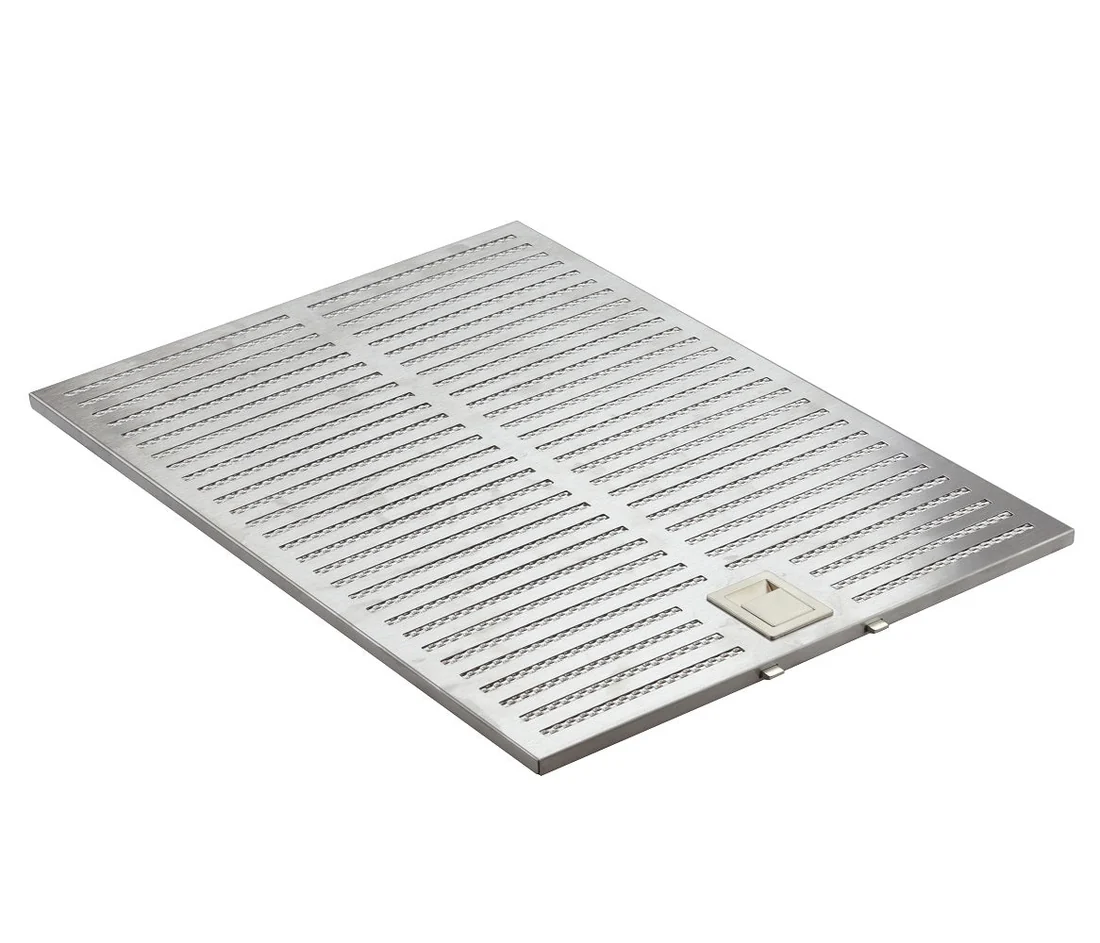
Jyntrel stainless steel oil removal filter mesh is a multi-layer grease and odour filter for recirculating range hoods, combining a 304 stainless steel frame and front cover with aluminium foil micro-mesh, flame-retardant polyester fibre and an activated carbon layer. It captures heavy grease and adsorbs cooking odours such as oil smoke and spicy notes instead of discharging them outdoors. It is intended for OEM and ODM range hood programmes and commercial kitchen exhaust purification where ducting is absent or recirculation is required, and it is supplied under the Jyntrel brand.
In a recirculating hood the filter sits in the return path of the air: grease-laden vapour leaves the cooking zone, passes through the mesh, and is returned to the kitchen. The filter is therefore selected against the duty of that path rather than as a standalone part. Airflow, face velocity and the grease loading of the cooking process decide how the layers are arranged and how often the cartridge is changed.
The 304 stainless steel frame and front cover hold the media stack square under load, so the foil micro-mesh and polyester fibre stay in position at higher face velocities. The aluminium foil micro-mesh acts as the first stage, separating and trapping heavy grease; the flame-retardant polyester fibre and the granular or powdered activated carbon layer behind it adsorb odours. Because the final stage is adsorption rather than exhaust, the pressure drop and the saturation of the carbon layer are the two variables that govern service life in the field.
Typical environments are open-plan kitchens, European-style top-draft and side-draft hoods, and commercial exhaust purification systems where recirculation or polishing is specified. Where the hood runs continuously or the cooking load is heavy, the filter is treated as a consumable and planned into the maintenance schedule.
The product performs two jobs in one element. The metallic and fibre stages separate and capture heavy oil and grease; the activated carbon stage adsorbs cooking odours, including oil-smoke and spicy notes, so that air returned to the room is less laden with smell. This dual action is the reason the element suits internal-circulation hoods, where there is no external discharge to dilute odours.
Fire safety is addressed at material level. The construction complies with UL 900 Class 1 / Class 2 fire safety testing certification, which matters in a component that sits close to a heat source and accumulates grease over time. The frame is available in high-strength aluminium profile or stainless steel, and the stainless steel front cover protects the media stack during handling and cleaning.
The filter is built for flexible specification: dimensions, structure, media grade, frame material, logo and packaging can all be set to the hood programme. This is a 100% flexible customisation model rather than a fixed catalogue range.
Selection starts with the air path, not with a part number. To propose a configuration we ask for the hood or appliance model, the installation envelope and, where available, a drawing; the design airflow and expected face velocity; the cooking type and grease loading; the recirculation or exhaust arrangement; and the target service interval. Quantity and packaging requirements follow, including logo and label needs for OEM programmes.
With those inputs, Jyntrel can adjust the layer sequence, the frame profile, the carbon loading and the mounting features such as clips and handles to suit the housing. Because the company has developed more than 1000 filtration solutions, the starting point is usually an existing architecture adapted to the new envelope rather than a new design from zero.
| Item | Detail |
|---|---|
| Product name | European-style range hood filter, activated carbon odour-control version |
| Core materials | 304 stainless steel outer frame and front cover; aluminium foil micro-mesh; flame-retardant polyester fibre; granular or powdered activated carbon layer |
| Main functions | Efficient separation and capture of heavy oil and grease; strong adsorption of cooking odours such as oil smoke and spicy notes |
| Flame-retardant certification | Complies with UL 900 Class 1 / Class 2 fire safety testing certification |
| Applications | Recirculating range hoods in open kitchens; commercial kitchen exhaust purification systems; European-style top-draft and side-draft hoods |
| Frame options | High-strength aluminium profile or stainless steel frame; various clips and handles available as options |
| Customisation and capacity | OEM/ODM flexible manufacturing; IATF 16949 and ISO 9001 systems; national-level CNAS testing centre for batch quality |
Jyntrel has more than 20 years of experience in filtration research and manufacturing and has exported to Europe, the United States, Japan, South Korea and other markets for over 20 years, which supports stable supply for long-running hood programmes. Multiple automated production lines give a monthly capacity of millions of pieces.
The production base covers a 50,000 m² plant, including six clean workshops totalling 20,000 m². The in-house laboratory is accredited by CNAS (China National Accreditation Service for Conformity Assessment) and can issue test reports on filtration efficiency, dust-holding capacity and resistance. Quality control runs through IQC, IPQC and OQC. The company holds IATF 16949 (obtained in 2024), ISO 9001, ISO 14001 and ISO 45001 certification, and products meet REACH and RoHS requirements with compliance documents available on request. Manufacturing is located in Zhongshan, Guangdong, China.
Send the hood or appliance model, the size or a drawing, the design airflow and expected face velocity, the cooking environment and grease load, the required quantity and your packaging or logo requirements. With that information Jyntrel can propose a filter configuration and confirm samples, lead time and pricing. Contact our team to start the selection.
The 304 stainless steel frame and front cover hold the media stack square so the foil micro-mesh and polyester fibre stay in position at higher face velocities. Final suitability depends on the design airflow and face velocity of your hood, so share those figures when requesting a quote.
We need the design airflow of the hood, the expected face velocity at the filter, the installation envelope and, where possible, a drawing. Cooking type and grease loading help us set the layer sequence and carbon loading.
Yes. Dimensions, structure, media grade, frame material, logo and packaging can all be customised under the OEM/ODM model. Clips and handles are available as options on aluminium or stainless steel frames.
Sample arrangements are confirmed against the specific configuration, so send the model, size or drawing and airflow data first. The team will then confirm sample availability together with the quotation.
MOQ depends on the configuration and is confirmed with the quotation for each project. Because the filter is built to the hood programme, quantity is reviewed together with dimensions, media grade and packaging.
Lead time is confirmed per order once the configuration and quantity are fixed. Multiple automated production lines with monthly capacity of millions of pieces support volume hood programmes.
Replacement depends on grease loading and running hours, because the activated carbon stage saturates as it adsorbs odours. We recommend setting the interval from your own operating conditions and monitoring pressure drop and odour breakthrough.
The construction complies with UL 900 Class 1 / Class 2 fire safety testing certification. Compliance documents for REACH and RoHS are also available on request; contact us with your operating conditions to discuss the right specification.