ソリューションを取得
JA-JP▼
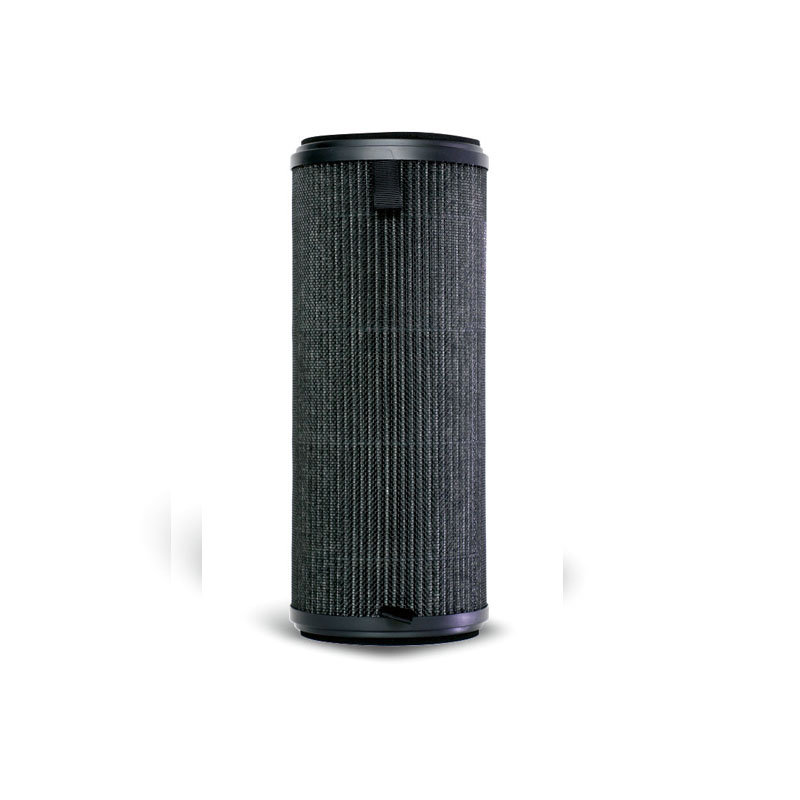
The Jyntrel cylindrical HEPA filter is a 360° radial-flow filter element for car air purifiers, capturing fine particulate matter such as PM2.5, pollen, dust and bacteria from the cabin air stream. It suits front-fit and aftermarket purifiers, cup-type units and dashboard consoles where space is tight and airflow must stay high. Jyntrel manufactures it in Zhongshan, Guangdong, China, to H11–H13 efficiency grades with PP, PP+PET or PTFE media and optional carbon layers for odour and formaldehyde control.
In a vehicle cabin, the purifier fan draws air through the filter's outer cylindrical face and pushes cleaned air out through the open core or the base. This radial path gives a large effective filtration area inside a small footprint, so the filter can handle the airflow a compact car purifier delivers without excessive pressure drop. Air velocity across the media depends on the fan curve and the unit's ducting; the pleat density and media grade are chosen together so the face velocity stays within the media's rated range.
The working environment is not a cleanroom. Cabin air carries road dust, exhaust soot, pollen and seasonal humidity, and the filter must hold these without collapsing or shedding. The cylindrical shape distributes incoming air evenly around the circumference, which limits localised loading and helps the element keep its shape as dust builds up. For humid or coastal markets, the PP and PTFE options resist moisture better than standard glass-fibre paper, and the pleat structure is stabilised to maintain spacing through repeated fan cycles.
Because the filter sits downstream of the fan in most purifiers, it also sees the fan's turbulence and any recirculation inside the housing. The outer diameter, inner diameter, height and base sealing flange are matched to the housing so that air cannot bypass the media. Jyntrel builds these dimensions to the customer's drawing or sample, so the filter fits the device rather than the device being adapted to the filter.
The filter is offered in H11 to H13 grades, with filtration efficiency for 0.3 μm particles from ≥95% to ≥99.95%, depending on the media selected. Customers can specify a higher grade where the device's fan can overcome the added resistance. The 360° inlet design increases the usable media area, which supports a higher clean air delivery rate (CADR) from the same fan power, and the high pleat count raises dust-holding capacity so the filter lasts longer between changes.
Three media families are available. PP melt-blown media is lightweight and cost-effective for standard cabin dust and pollen control. PP+PET composite media adds mechanical strength and pleat stability for units that run at higher face velocities. PTFE media provides high efficiency with lower airflow resistance, which suits compact purifiers with limited fan pressure. For odour, formaldehyde or VOC control, Jyntrel can add an outer or inner pre-filter layer or a built-in columnar or modified activated carbon layer.
Pressure drop, dust-holding capacity and efficiency are related: a denser media or higher grade raises efficiency but also resistance, so the selection must match the purifier's fan curve. Jyntrel's engineering team reviews the device data and recommends the media grade and pleat geometry that keep the system within its airflow target. The company's CNAS-accredited laboratory can test filtration efficiency, resistance and dust-holding capacity and issue reports for each batch.
To recommend the right filter, Jyntrel needs the device model or a dimensional drawing showing outer diameter, inner diameter, height and sealing flange. Please also state the design airflow of the purifier, the expected face velocity if known, and the operating environment (for example, heavy traffic, coastal humidity or seasonal pollen). The target HEPA grade, whether a carbon layer is required, and the expected replacement interval help narrow the media choice. Finally, provide the order quantity and packaging requirements, including logo and retail box needs.
Customisation covers outer and inner diameter, height, base sealing flange design, media type and grade, carbon weight, and end-cap material. Jyntrel can develop a new tool for a specific housing and has built more than 1000 filtration solutions. OEM and ODM projects are supported, with packaging options such as colour boxes, blister packs and printed logos.
| Item | Detail |
|---|---|
| Product name | Cylindrical HEPA Filter for Car Air Purifier |
| Structure | 360° annular air inlet, high-density pleating, maximised effective area |
| Media options | PP melt-blown, PP+PET composite, PTFE high-efficiency media |
| Filtration efficiency | Customisable to H11–H13 HEPA grades according to end-device requirements |
| Composite upgrade | Optional inner or outer pre-filter mesh or built-in columnar/modified activated carbon layer for formaldehyde and odour control |
| Core applications | Front-fit and aftermarket car air purifiers, desktop mini purifiers, humidifying purifier combos |
| Dimensions | Tooled to customer requirements: various outer diameter, inner diameter, height and base sealing flange designs |
| Quality system | Produced in 20,000 m² of cleanrooms; IATF 16949 automotive quality management system and ISO 9001/14001 certified |
The filter is used in car air purifiers that fit on the dashboard, in cup holders or behind the rear seat, as well as in desktop mini purifiers and humidifying purifier combinations. In vehicles, it addresses PM2.5, pollen, dust and bacteria that enter through the HVAC system or open windows. For markets with high traffic density, the carbon composite version adds formaldehyde and odour removal. The same cylindrical format is also used in small portable purifiers where a compact radial filter is preferred over a flat panel.
Jyntrel operates multiple automated production lines with a monthly capacity of millions of pieces, supported by more than 20 years of export experience to Europe, the United States, Japan and South Korea. The 50,000 m² plant includes six cleanrooms totalling 20,000 m², where pleating, assembly and packaging take place under controlled conditions. The company has held ISO 9001, ISO 14001 and ISO 45001 certification, and in 2024 obtained IATF 16949 automotive quality management system certification. Its in-house CNAS-accredited laboratory can issue test reports for filtration efficiency, dust-holding capacity and resistance, and products comply with REACH and RoHS requirements. IQC, IPQC and OQC checks run through the production flow.
To receive a tailored quotation, please tell us your device or vehicle model, the required size or a drawing, the design airflow or water flow, the operating conditions (temperature, humidity, pollutant focus) and the order quantity. Contact Jyntrel with these details and our engineering team will respond with a filter specification and sample plan.
Yes, the cylindrical design spreads incoming air over a large media area, which keeps face velocity within the media's range even when the purifier fan runs at high speed. For high-velocity systems, Jyntrel recommends PP+PET composite or PTFE media, which maintain pleat stability and lower resistance. Selection should be based on the fan curve and the required HEPA grade.
We need the design airflow of the purifier in m³/h or CFM, the expected face velocity if known, and the fan's static pressure curve. These figures let us match media grade and pleat geometry to your device. Please also state the target HEPA grade and whether a carbon layer is required.
The filter is available in H11 to H13 grades, with filtration efficiency for 0.3 μm particles from ≥95% to ≥99.95%. The exact grade depends on the media selected and the airflow the fan can support. Jyntrel's CNAS-accredited laboratory can test and report efficiency for each batch.
Yes. Jyntrel tooling covers outer diameter, inner diameter, height and base sealing flange to match your drawing or sample. Media type, HEPA grade, carbon weight and end-cap material can also be specified. OEM and ODM projects are supported, including logo and packaging customisation.
Samples of existing specifications are typically available in 3–5 working days, while custom tooled samples usually take 15–25 working days. Quotations are prepared after we receive your device data, target grade and order quantity. Contact us through the inquiry form to start the process.
The MOQ for standard cylindrical HEPA filters is usually 1,000 pieces; custom tooling projects are quoted separately based on complexity. Bulk orders typically ship in 25–35 days, and we recommend planning ahead during peak season. Jyntrel's automated lines support monthly output in the millions of pieces.
In normal car use, Jyntrel recommends replacement every 6–12 months, depending on local air pollution and daily operating hours. The high dust-holding capacity of the pleated media helps maintain performance between changes. We can provide life-test data from our CNAS-accredited laboratory to help set a replacement schedule.
Yes. PP and PTFE media options resist moisture better than standard glass-fibre paper, and the pleat structure is stabilised to hold spacing in humid air. Please state the operating humidity range when you inquire so we can recommend the appropriate media and packaging. Share your operating conditions via our contact page for a tailored specification.