
솔루션 받기
KO-KR▼
본 제품은 아래 브랜드의 장비 및 응용 분야와 호환되거나 이에 적합하며, 선정 시 참고용으로만 제공됩니다. 상표는 각 소유자에게 귀속되며 파트너십이나 보증을 의미하지 않습니다.
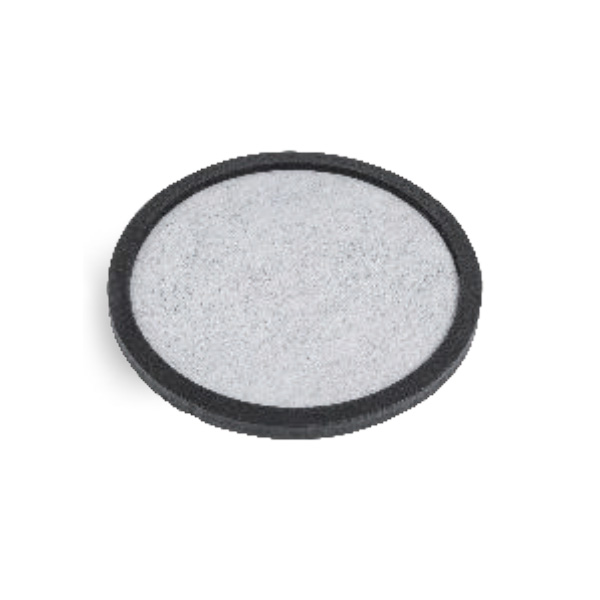
This is a Jyntrel coffee machine water filter cartridge built as a direct replacement compatible with MR.COFFEE machines. It filters the incoming water through a three-stage path — high-density fibre, coconut-shell activated carbon, then ion exchange resin — to reduce chlorine, odour, sediment, heavy metals such as lead and mercury, and hardness that forms scale. It is made for automatic and semi-automatic espresso machines, drip coffee makers, high-end water dispensers, ice makers and sport filter bottles, and for buyers who need a stable supply of replacement cartridges under their own brand.
A coffee machine filter works under conditions the machine sets, not the filter: mains pressure on the inlet side, a fixed flow rate demanded by the brew cycle, and water temperature that rises sharply during extraction. The cartridge sits in the water line ahead of the brew path, so everything the machine draws passes through it first. In that position the filter sees short, repeated draw-offs rather than steady flow, which is why contact time and media packing matter as much as raw capacity.
Inside the cartridge the water moves from the outer fibre layer inward through the carbon bed and then the resin bed before leaving through the outlet. The fibre layer takes the coarse load — sediment and rust carried in from the supply — and protects the media behind it. The coconut-shell carbon adsorbs chlorine and taste-and-odour compounds that would otherwise flatten the cup. The ion exchange resin then exchanges hardness ions, which is the stage that limits scale build-up in the boiler and on the shower screen. A cartridge that is exhausted in the carbon stage but still softening, or the reverse, behaves differently in the machine; that is why the three media are matched in one housing rather than sold separately.
For designers, the relevant variables are inlet pressure, the flow rate the machine requires during brewing, the total volume drawn per day, and the hardness and chlorine level of the local water. These four values decide the media ratio and the service life more than the cartridge shape does. Share them and the specification can be fixed before tooling is discussed.
Softening and scale control. Food-grade ion exchange resin reduces hardness minerals in the water, lowering the scale load that reaches the boiler and brew group. In hard-water areas this is the difference between a cartridge that protects the machine for a full cycle and one that saturates early.
Chlorine and odour reduction. Coconut-shell activated carbon with a high iodine value adsorbs residual chlorine and the odour compounds that carry into the cup. The aim is water that does not taste of the treatment plant, so the coffee's own flavour and aroma come through.
Particulate and heavy-metal interception. The high-density microporous fibre layer stops sediment and fine particles, and the media combination reduces harmful heavy-metal ions including lead and mercury, as stated in the product performance profile.
Service life. The standard rating is two months or 60 gallons (about 227 litres) of filtered water, whichever comes first. Where water quality differs, the media formulation can be adjusted and the life re-rated for that market.
Jyntrel supports OEM and ODM work on this cartridge in full: housing shape, connector and clip style, and internal media ratio can all be tooled to the appliance. Development of an adapted cartridge for a mainstream brand typically runs 15–30 days from sample or drawing.
To quote accurately, send:
With those inputs the media ratio, connector and packaging can be specified in one pass rather than by trial.
| Item | Detail |
|---|---|
| Product name | Coffee machine water filter cartridge / water dispenser filter |
| Filtration principle and structure | Three-stage fine filtration: first, outer fibre layer; second, coconut-shell activated carbon; third, ion exchange resin |
| Core filtration media | Food-grade ion exchange resin, coconut-shell activated carbon, high-density fibre |
| Core performance | Anti-scale water softening; adsorption of residual chlorine and odour; interception of sediment and harmful heavy-metal ions such as lead and mercury |
| Main end applications | Automatic and semi-automatic espresso machines, drip coffee makers, high-end water dispensers, ice makers, sport filter bottles |
| Size and specification customisation | 100% OEM supported: housing shape, connector and clip style, and internal media ratio can be tooled to the customer's appliance requirements |
| Quality certification | 50,000 m² plant certified to ISO 9001 and IATF 16949; filter media meet water-contact safety standards; quality assured by a CNAS-accredited testing centre |
| Standard service life | 2 months or 60 gallons (about 227 litres), whichever comes first |
Where the same media set is used across several of these products, the housing and connector change but the water path and media order stay the same, which simplifies qualification across a brand's range.
Jyntrel runs multiple automated production lines with a monthly capacity of millions of pieces, which is what keeps replacement-cartridge programmes supplied through seasonal peaks. More than 20 years of continuous export to Europe, the United States, Japan and South Korea underlies that supply stability.
The 50,000 m² plant in Zhongshan, Guangdong, includes six clean rooms totalling 20,000 m², so media filling is not exposed to ambient contamination. The site holds ISO 9001, ISO 14001 and ISO 45001 certification and was certified to IATF 16949 in 2024. An in-house laboratory accredited by CNAS can issue test reports on filtration efficiency, dust-holding capacity and resistance, and quality control runs through IQC, IPQC and OQC at each stage. Products meet REACH and RoHS requirements and compliance documents can be supplied. More than 1,000 filtration solutions have been developed to date, a base we draw on when adapting a cartridge to a new machine.
Send the machine or appliance model, the cartridge size or a drawing, the flow rate or daily draw-off volume, the water hardness and chlorine level, your target quantity and destination market. With those details we can propose the media ratio, connector and packaging and return a quotation.
Contact our team to start the specification.
The standard build uses ion exchange resin for hardness and high-iodine coconut-shell carbon for chlorine, so it manages both in one pass. For exceptionally hard or heavily chlorinated supply, the media ratio can be adjusted and the service life re-rated for that market. Send your local water report and we will specify the formulation.
We need the machine brand and model, required flow rate, daily draw-off volume, water hardness and chlorine level, and target replacement interval. A sample cartridge or dimensional drawing shortens the process considerably. From those inputs we fix the media ratio and connector before tooling.
Yes. Jyntrel supports ODM development for other mainstream coffee machine brands based on your sample or drawing, and adapted cartridge development typically takes 15–30 days. Housing shape, connector and clip style, and internal media ratio are all tooled to your appliance. Private-label packaging with logo and multilingual instructions is also available.
The standard rating is two months or 60 gallons (about 227 litres) of filtered water, whichever comes first. In hard-water areas the interval may need to be shorter; the formulation can be adjusted to match. We recommend setting the replacement interval from the hardness data for each market.
Standard models typically carry an MOQ of 1,000–2,000 pieces, and custom projects are negotiated by specification and packaging. Stock models can be sampled in 1–3 pieces free of charge, with the customer covering international courier cost; custom sampling fees are credited against the bulk order. Standard orders usually ship in 25–35 days and custom orders in 35–45 days.
Raw materials are sourced from long-term suppliers with a COA for each carbon and resin lot, and automated filling equipment controls media weight and density. The CNAS-accredited laboratory samples each finished batch for flow and filtration performance, and retains samples for three years for traceability. IQC, IPQC and OQC checks run through production.
The filter media meet the water-contact safety standards stated for this product, and the plant holds ISO 9001, ISO 14001, ISO 45001 and, since 2024, IATF 16949. Products meet REACH and RoHS requirements, and compliance documents can be provided. Confirm the specific market requirements with our team when you inquire.
Send the machine model, size or drawing, flow rate or daily volume, operating conditions, quantity and destination market through our contact page. We will come back with a proposed specification and quotation. You can reach the team here: <a href="/en/contact">contact us</a>.