
Nhận giải pháp
VI-VN▼
Sản phẩm này tương thích hoặc phù hợp với thiết bị và ứng dụng của các thương hiệu sau, chỉ dùng để tham khảo khi lựa chọn. Nhãn hiệu thuộc về chủ sở hữu tương ứng; không ngụ ý hợp tác hay chứng thực.
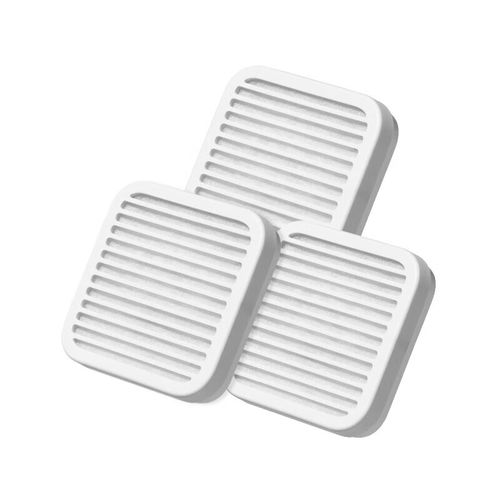
The Jyntrel Feeder Desiccant Box is a moisture-control component designed for automatic pet feeders and dry-food storage bins. It adsorbs airborne moisture and odours inside the hopper, helping to keep dry kibble fresh and free-flowing. It is intended for pet-appliance brands and OEM/ODM customers who need a custom-fit drying solution for their feeder models.
Inside an automatic feeder, the air path is largely closed: the hopper is sealed by a lid, with small gaps around the dispensing outlet and lid seams. Air exchange is driven by temperature swings, lid openings and the feeder's own dispensing action. In this environment, the desiccant box sits in the headspace above the kibble or in a dedicated compartment, where it contacts the air that moves through the hopper.
Relative humidity inside the hopper depends on ambient conditions and how often the lid is opened. In normal indoor use, the box is designed to help keep hopper humidity below 60%RH, reducing the risk of kibble clumping, oxidation and mould growth. In coastal or plum-rain-season environments, humidity loads are higher, and the replacement interval should be shortened accordingly. The box does not generate airflow; it works passively, relying on natural diffusion and the small air movements created when the feeder operates.
Because every feeder has a different internal layout, the box shape and mounting method are customised. Common mounting options include snap-on lid clips, threaded twist-fit and drawer-style slots. The goal is a simple user experience: the owner opens the lid or pulls out the drawer and swaps the box without tools.
The drying core uses food-contact-grade colour-indicating silica gel or high-efficiency mineral desiccant granules. The outer housing is made of food-contact-grade ABS plastic, with an internal high-permeability PET non-woven layer that keeps granules contained while allowing moisture vapour to pass. This construction supports strong moisture adsorption and helps prevent clumping, so kibble flows smoothly through the dispenser.
The box also supports odour control and helps inhibit mould and insect eggs, contributing to pet digestive comfort. The colour-indicating silica gel gives a visual cue for replacement, and the box can be specified with a smart-app reminder function if the feeder has connectivity. All materials are selected for food-contact safety, and the finished box is assembled in a controlled environment to protect the desiccant's initial activity.
To recommend or develop the right desiccant box, we need the feeder model and a drawing or 3D file of the installation space. Please also share the hopper volume, the typical ambient temperature and humidity range, how often the lid is opened, and the target replacement interval. If you have a preferred mounting style (snap-on, threaded or drawer), let us know. For OEM projects, we can customise dimensions, housing material and colour, desiccant type and ratio, logo printing, individual packaging and multilingual labels. Our team has developed more than 1,000 filtration solutions and can support a one-stop customisation from concept to production.
| Item | Detail |
|---|---|
| Product name | Feeder desiccant box / dry-food storage dehumidifying box / anti-mould freshness component |
| Core drying material | Food-contact-grade colour-indicating silica gel or high-efficiency mineral desiccant granules |
| Housing material | Food-contact-grade ABS plastic outer housing with internal high-permeability PET non-woven leak-proof layer |
| Core protective performance | Adsorbs free moisture in the air; helps control hopper humidity below 60%RH; helps prevent kibble from absorbing moisture, oxidising, moulding and insect infestation |
| Recommended replacement interval | 30 days per replacement in normal environments; 20–25 days in southern China plum-rain season or coastal high-humidity environments (can be combined with smart app reminder) |
| Dimensions and mounting customisation | 100% custom moulded to customer equipment dimensions. Supports various lid snap-on, threaded twist-fit and drawer-style mounting structures to ensure a convenient user experience of "open and replace" |
| Quality certification | Materials guaranteed non-toxic and safe by a national CNAS testing centre. The company has passed ISO 9001, ISO 14001 and IATF 16949 international quality management system certifications |
The Jyntrel Feeder Desiccant Box is used in automatic pet feeders with dry-food hoppers, including programmable timed feeders and large-capacity storage-bin feeders. It is also suitable for standalone dry-food storage containers where moisture control is needed. The box is not intended for wet or semi-moist food. For feeders with integrated cameras or smart features, the box can be designed to fit around existing electronics without interfering with sensors. Because it is a passive component, it adds no power draw and requires no wiring.
Jyntrel operates multiple automated production lines with a monthly capacity of millions of pieces, supported by more than 20 years of export experience to Europe, the United States, Japan and South Korea. Our 50,000 m² plant includes six cleanrooms totalling 20,000 m², where desiccant boxes are filled and sealed to protect the drying material from ambient moisture. The company is certified to ISO 9001, ISO 9001, ISO 14001 and ISO 45001, and achieved IATF 16949 certification in 2024.
Quality control follows IQC, IPQC and OQC procedures, with batch testing of adsorption performance, seal integrity and appearance. Our own laboratory is CNAS-accredited and can issue test reports for filtration efficiency, dust holding capacity and resistance, as well as moisture-related performance for this product. Products comply with REACH and RoHS environmental regulations, and compliance documents are available on request. We support OEM/ODM customisation of dimensions, structure, filter media grade, housing material, logo and packaging, and have developed over 1,000 filtration solutions.
For customers who require third-party test reports, we can coordinate with SGS, Intertek or BV and share reasonable testing costs. We also welcome factory visits in Zhongshan, Guangdong, China, to review our cleanrooms, laboratory and production lines.
To receive a tailored recommendation, please tell us your feeder or storage-bin model, the installation space dimensions or a drawing, the hopper volume, the typical temperature and humidity range, how often the lid is opened, and your expected order quantity. If you have a target replacement interval or a preferred mounting style, include that as well. Send your details through our contact page, and our team will respond with a solution-oriented proposal.
The box is designed for passive diffusion in closed hoppers, not for high-velocity ducts. In a feeder, air movement is low, so the desiccant works by natural moisture migration. If your application has forced airflow, please share the airflow rate and we can advise on a suitable configuration.
For feeder applications, we mainly need the hopper volume, lid-opening frequency and ambient humidity range rather than airflow. If your system includes a fan or vent, please provide the airflow rate in m³/h and the air path description. This helps us estimate the moisture load and recommend the right desiccant quantity.
In typical indoor use, the box is designed to help keep hopper humidity below 60%RH. Actual performance depends on the feeder's seal quality, ambient humidity and how often the lid is opened. In coastal or plum-rain-season conditions, we recommend a shorter replacement interval of 20–25 days.
Yes. We customise the dimensions, mounting structure (snap-on, threaded or drawer-style), housing colour, desiccant type and packaging to match your feeder. Please provide a drawing or 3D file of the installation space and your target replacement interval. Our team has developed over 1,000 filtration solutions and can support OEM/ODM projects.
Standard models typically have an MOQ of 3,000–5,000 pieces, while custom models depend on structure complexity and tooling. Samples of existing specifications ship in 3–5 working days; custom samples take 7–15 working days. Bulk lead time is 15–25 days for standard models and 25–40 days for custom models.
In normal environments, replace the box every 30 days. In southern China's plum-rain season or coastal high-humidity areas, replace every 20–25 days. The colour-indicating silica gel provides a visual cue, and the box can be integrated with a smart app reminder if your feeder supports it.
Our CNAS-accredited laboratory can provide internal test reports for adsorption performance, seal integrity and dust shedding. For third-party reports from SGS, Intertek or BV, we can coordinate testing and share reasonable costs. We also comply with REACH and RoHS and can supply compliance documents.
Please share your feeder model, installation space dimensions or drawing, hopper volume, typical temperature and humidity range, lid-opening frequency and expected order quantity. If you have a target replacement interval or mounting preference, include that too. Send these details through our contact page for a tailored proposal.